
In 2007, Anthony Ogden stated what many before and after would agree with:
“It is widely accepted that an education abroad experience can have a considerable impact upon a student, potentially truly transformative inter-culturally and intellectually.”
Having led dozens of students on learning experiences abroad, I’ve seen this growth first-hand. And many students after their trips, including years later, have expressed to me how much their time abroad changed them.
Students clearly get a lot out of field trips abroad. This also means there is a lot of giving by those who host and interact with our students. Ogden cautions, though, that:
“Incorporating student field trips is another admirable attempt at intercultural integration but all too often does very little to foster notions of reciprocity with the local community.”
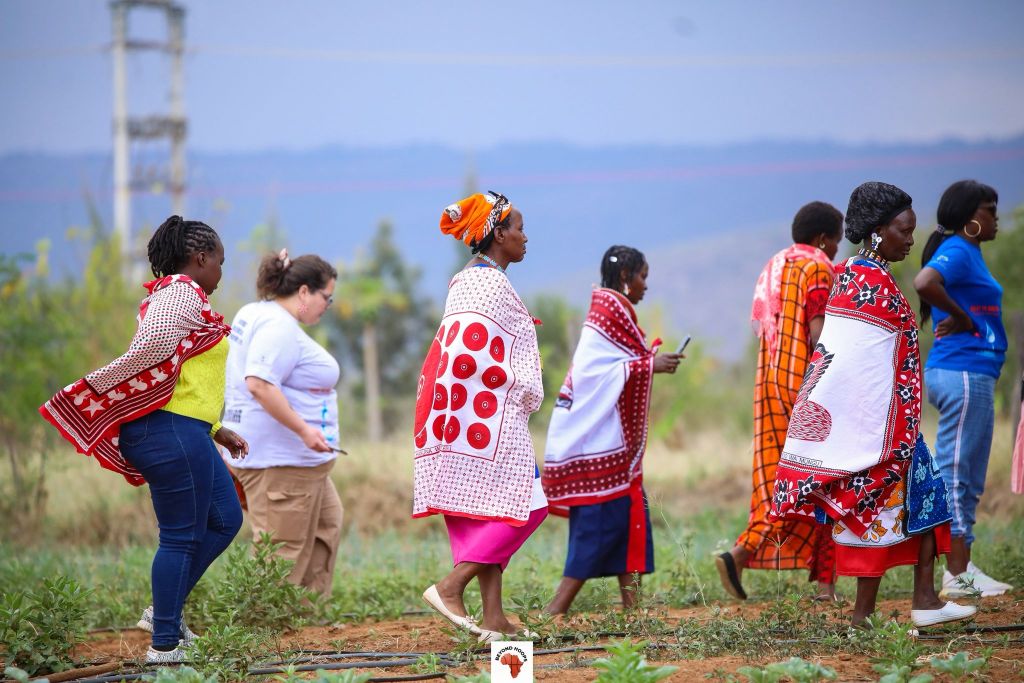
My colleague Michelle and I took on this challenge in leading a March 2025 field trip to Kenya by a group of Human Service Work students. We wanted authentic engagements that would see that the giving would be two-way. We worked with Kenyan social enterprises, including Beyond Hoops Africa, that have missions to support fellow Kenyans. Our partners understood that we sought the opposite of “voyeuristic, framed experience(s) with limited or no meaningful intercultural exchange” (Ogden). And our partners delivered. They gave our students chances for meaningful conversations. These included interactions with two student groups and two groups of women who were using collective action to overcome profound challenges.
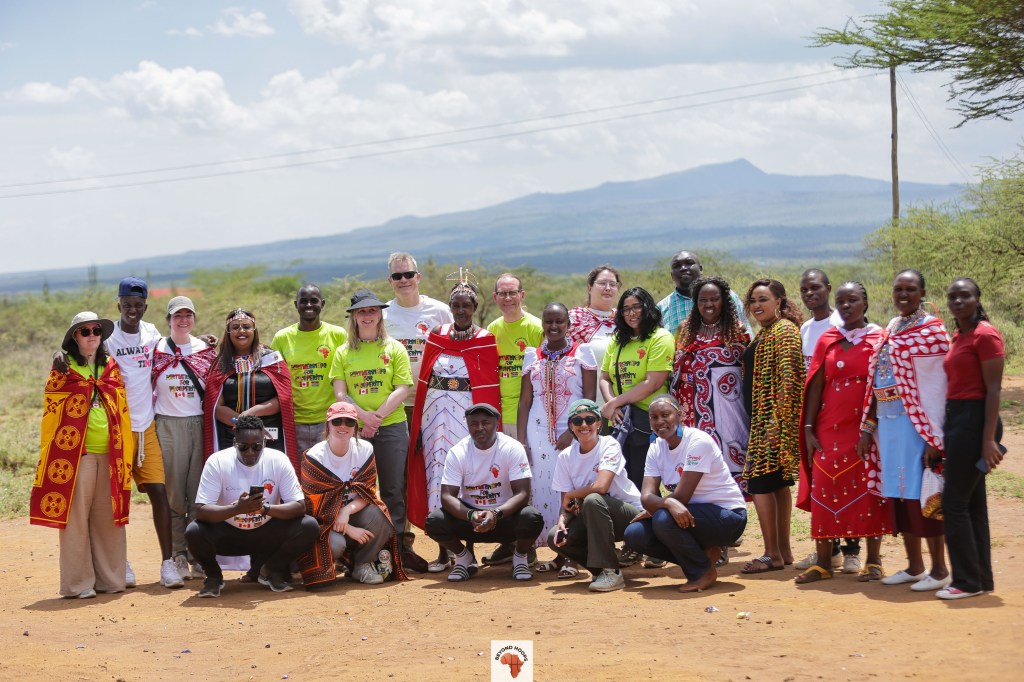
Some students found it difficult to prepare for the type of meaningful exchanges that we had in mind. Canada scores comparable to Kenya on Geert Hofstede’s “uncertainty avoidance” dimension (The Culture Factor Group). However, I’ve observed that Canadian students normally want, need or demand a high level of predictability and certainty. Before departure, we provided training to enhance intercultural communication capacity. We informed our students that they would be meeting with a Maasia women’s community-based organization in Ewaso village in Kajiado County. And we advised that our interactions would be guided by our hosts’ cultural norms. Beyond that, our students would need to navigate an ambiguous space outside of their normal comfort zones. We could not, for instance give more details about who we would meet, how many, what the program for our engagement would be, when, what or if we would be eating, if bathrooms would be available, and how long our engagement would take.
By shifting teaching methodologies, Michelle and I believe we made a small step forward in addressing “colonial tendencies” associated with learning abroad (Sharpe, 2015). We did this through authentic conversations on the reality of students’ and hosts daily lives, including challenges, opportunities, and hopes and dreams. These conversations were loosely structured, hours-long interactions with our students embedded in our hosts’ real-life contexts.
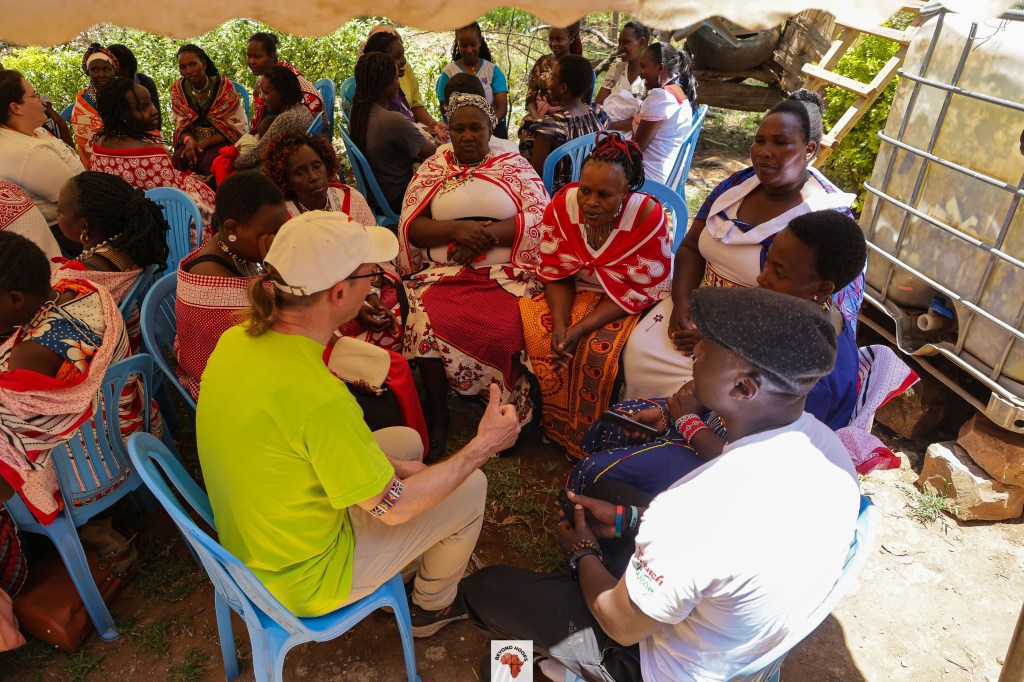
Our students experienced some discomfort, given ambiguity and uncertainty as to whether they may be called upon to speak to the group as a whole. There were physical discomforts too with heat, dust and somewhat rustic bathroom facilities. As well, Michelle and I neither facilitated nor were distraction-creating observers. With Beyond Hoops facilitating, we were embedded into the activity on an equal basis to others. And all of this was great in helping our students move beyond “the comfortable environs of the (metaphorical) veranda while observing their host community from a safe and unchallenging distance” to a place where they could settle into discomfort and ultimately engage in meaningful and authentic conversations (Ogden).
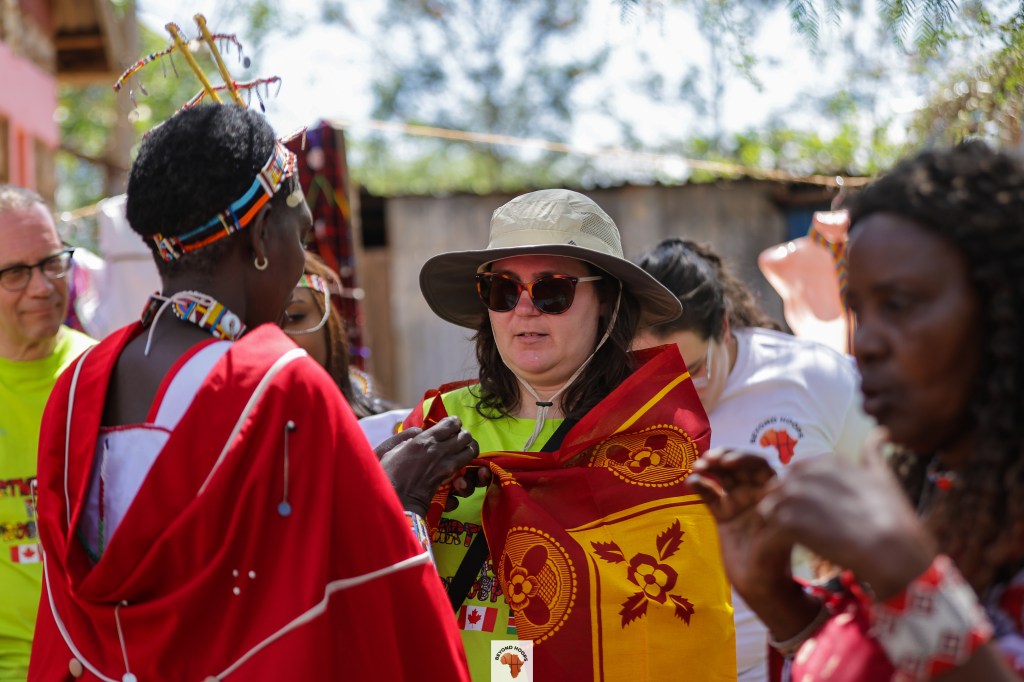
While the difference in privilege was obvious to all, our students and hosts connected over what they have in common. Sometimes these were small things. For example, our smartphone-wielding students saw that their hosts, who have few material possessions, also have phones that also contain volumes of photos of loved ones and special experiences. Sometimes connections revolved around big things. An Indigenous student and Maasai hosts shared the ongoing impact of colonialism on each other’s communities. Sometimes connections were made over difficult things. This included conversations on gender-based violence and the value of collective action and self-empowerment.
With the emphasis on reciprocity, our students were aided in moving beyond the white saviour disposition. They moved from thinking they know what’s best to a position of solidarity with their hosts. Our students listened as much as they spoke. In doing so, they learned what their hosts would find as meaningful manifestations of solidarity. In Ewaso village, our students heard that it wasn’t the big things that white saviours frequently have in mind in fixing problems in Africa, such as building a school / orphanage / church. Rather, solidarity meant assisting with some basic practicalities of daily life: increasing water storage capacity, acquiring small items for income generation (e.g., bee hives), and overcoming the costs of feminine hygiene products.
Whether learning abroad features either voyeurism or reciprocity, often promises or commitments are made by students when in the thick of an experience in another country. I have often seen that promises or commitments fade upon returning home. They are not kept. However, even months after our return, it was important for us to reflect upon what we had learned from our hosts. And we needed to decide what we would do with this information. We aimed to see that learning abroad would keep on giving.
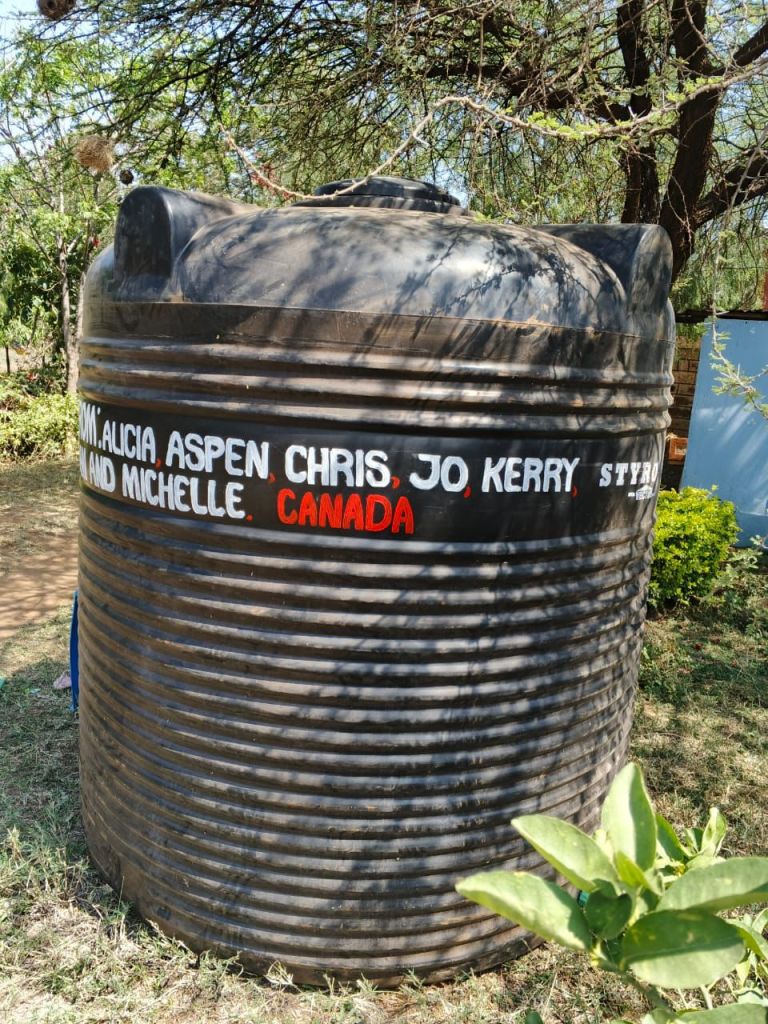
Together, we coalesced around the idea of supporting the community-based organization’s expressed wish to increase its water storage capacity. The physical icon of water storage in Kenya is the ubiquitous 1,000 litre black water storage container. This alone isn’t too expensive. By continuing to listen to our partners, we learned that purchasing a water container alone would do very little to help unless we also dealt with transportation, installation, associated equipment (e.g., a pump) and administrative time. As a group we raised $1,500 to acquire all that was needed to increase water storage capacity. Not everyone in our group had the means to financially contribute to the effort, and that didn’t matter. What was important to us was that this was a group response to what we had heard.
Finally, a student can make one of the grandest commitments by saying to hosts, “I will return.” This promise is almost never met. One of our students made this commitment to our hosts in Ewaso village. However, for this student, this wasn’t a throw-away statement. She indeed did return on her own dime and her own time. She came back not to save anyone but to listen some more. She wanted to sustain two-way giving that flowed from her experience abroad.
References:
Ogden, A. (2007). The View from the Veranda: Understanding Today’s Colonial Student. Frontiers: The Interdisciplinary Journal of Study Abroad, 15(1), 35–56. https://doi.org/10.36366/frontiers.v15i1.215
Sharpe, E. K. (2015). Colonial Tendencies in Education Abroad. International Journal of Teaching and Learning in Higher Education, Volume 27, Number 2, 227-234. http://www.isetl.org/ijtlhe/ ISSN 1812-9129
The Culture Factor Lab. (n.d.) Country Comparison Tool. https://www.theculturefactor.com/country-comparison-tool
Learn more about Beyond Hoops Africa!
Licensing:
(c) Kerry Brinkert
This work is licensed under a Creative Commons Attribution-NonCommercial-NoDerivatives 4.0 International License.
 Global Engagement Gateway